



A glimpse at tomorrow’s journeys
“By 2040, leisure travel spending will triple, but experiences, not volume, will define success.”
Now in its 33rd year, Arabian Travel Market (ATM) – the leading international travel and tourism event in the Middle East – has played a pivotal role in defining, championing, and accelerating the industry agenda, and the 2026 edition is no exception.
With the show’s forward-looking theme exploring “Travel 2040: Driving New Frontiers Through Innovation and Technology”, this article looks ahead 15 years and asks a simple question: how will the choices we make at ATM in 2026 shape the journeys the world takes tomorrow?
By 2040, how people move, book, and experience travel will be radically different. Border checks will be digital, AI will design itineraries in minutes, and low-carbon mobility will be standard on many routes.
This transformation is a necessity to facilitate fast-paced growth, with the World Economic Forum forecasting 30 billion tourist visits and a $16 trillion GDP contribution by 2034 and Google Think predicting a 60% rise in international travellers by 2040, with trips reaching 2.4 billion.
For leaders across aviation, hospitality, and destinations, the next 15 years are a critical window to re-engineer the industry around innovation, partnership, and purposeful growth.
That’s why events such as ATM 2026 (May 4–7) are so important, with its 2040 theme uniting the global travel community to experiment, collaborate, and discuss ideas that could become standard practice in the future, laying the groundwork for the industry’s next era.
Macro trends defining travel to 2040

“The macro shifts to 2040 will set ATM 2026’s content agenda, from future mobility to regenerative growth.”
The shifts to 2040 are already here: new source markets, greener mobility, deeper sustainability. They will anchor ATM 2026 and frame its conversations on tech, sustainability, and the future of mobility.
- Demand on a new scale
Travel is entering an era of unprecedented volume and value, with the aforementioned WEF and Google growth forecasts underscoring both the opportunity and the operational challenge ahead. It is amplified in the Middle East where ATM commissioned the ATM Travel Trends Report 2025 to quantify the shift. It reveals destinations such as Saudi Arabia and the UAE are driving record tourism investment and pioneering low-carbon travel systems, with regional travel spend expected to surpass $350 billion by 2030 and inbound growth nearly twice the global average.
- Shifts in source markets
Emerging economies will drive this surge. India’s outbound travel could be five times larger by 2040 (Google Think), while China, Vietnam, Saudi Arabia, and parts of Africa are set to become powerhouse source markets, dictating global strategies, networks, and marketing models.
- Technology and mobility
Meanwhile, AI, VR, and sustainable propulsion systems are revolutionising how people move. Think AI-powered concierges, biometric border checks, electric or hydrogen aircraft. These are all hallmarks of a hyper-connected, low-emission future.
- Sustainability and resilience
At the same time, sustainability has evolved beyond minimising harm. The new priority is to ‘do more good’, with regenerative tourism that restores ecosystems and shares benefits equitably among communities.
This macro activity is the backdrop to every travel segment, from leisure to business events, and emphasises how innovation will determine the traveller experience.
Leisure travel: where volume meets values

“The next wave of leisure is modular, meaningful and designed around the traveller’s values.”
At ATM 2026, leisure leaders will explore how these big-picture trends are redefining destination storytelling and product design for the next generation of travellers. The stakes are high: leisure travel remains the beating heart of global tourism, and of the shows that support its growth, like ATM.
This won’t change: analysts expect leisure travel spending to triple to $15 trillion by 2040 (BCG), up from $5 trillion today, with domestic and regional trips taking the lion’s share ($12 trillion) of spend
But tomorrow’s leisure travellers will look for far more than sightseeing. They will seek transformative, purposeful experiences such as slow travel, micro-adventures, community engagement, and self-discovery missions.
Virtual reality previews and AI travel planners will empower travellers to ‘try before they buy’, testing itineraries or destinations through immersive digital journeys before booking. These ideas will be explored at ATM Travel Tech – now an expanded, co-located event at ATM 2026, showcasing the technologies expected to transform global travel by 2040.
By this date, booking may feel less like a transaction and more like a conversation, with AI assistants curating options based on mood, health data, and past experiences.
For travel providers, the mandate is clear: curate modular, authentic, and personalised experiences that flex to the traveller’s values and pace. Those who can fuse empathy with innovation will lead.
Luxury and ultraluxury: defined for 2040
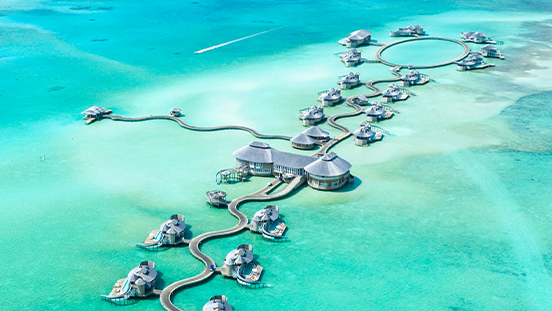
“Luxury evolves from opulence to purpose; ultra-luxury pushes into transformational, frontier travel.”
As these behaviours scale, they intensify in premium segments, reshaping luxury and ultra-luxury expectations.
Luxury (HNW): experiential, purpose-driven, sustainable
Luxury travellers will increasingly trade extravagance for meaning and impact. The most in-demand luxury experiences by 2040 will pair carbon-negative design, local collaboration, and regenerative outcomes.
Think resorts where every stay funds coral restoration; guided encounters that channel indigenous knowledge; wellness and nature-centric itineraries. Technology will heighten, not replace, emotional connection: AI concierges anticipating needs, rooms tuned to circadian rhythms, and frictionless service that feels human.
Ultra-Luxury (UHNW): transformational, frontier, bespoke
Ultra-high-net-worth travellers will pursue deep personal transformation and boundary-pushing adventures: remote polar expeditions, near-space/orbital experiences, and deep-expedition journeys with scientific or conservation purpose.
Programmes will be built around privacy, mastery, and legacy impact, calling on brands to invest as much in human talent as in tech. Storytellers, curators, expedition leaders and wellness specialists will craft meaning in every moment.
ATM 2026’s Ultra Luxury Lounge will explore this evolution end-to-end. Designed as an exclusive environment for high-end hospitality, private aviation, yachting, and bespoke travel brands, it will connect innovators setting the standard for purposeful luxury and transformational ultra-luxury.
Global business events: the new collaborative canvas

“Events are shifting from attendance to outcomes — designed for connection, creativity and impact.”
As luxury travel evolves toward meaning and connection, business events are following suit, becoming spaces for collaboration, creativity, and purposeful engagement. ATM’s dedicated MICE platform, IBTM @ ATM 2026, returns for a second year, convening global buyers, planners, and destinations explore these themes and chart the sector’s future.
With a dedicated business events hub in Hall 3, it too will become a space to connect, collaborate and capture opportunities in this high-growth market. And the momentum is clear – with the global MICE sector set to rise from $782.8 billion in 2023 to a projected $1.34 trillion by 2033, growing 5-6% annually.
The Middle East is leading the charge, with the UAE projected to hit $9.26 billion by 2030 and Saudi Arabia $5.33 billion, both expanding at double-digit pace (WTM Hub), underscoring the need for a forum like IBTM @ ATM 2026, now in its second year due to overwhelming launch success in 2025.
Conferences are evolving into multi-hub, hybrid experiences blending digital and physical presence.
Agendas emphasise wellness, inclusivity, and local culture, while ‘bleisure’ – the blend of business and leisure that has become the norm – is now integral to event design.
Attendees also expect AI-driven matchmaking, XR presentations, real-time sustainability metrics, and more, and this will continue, all trends converging at IBTM @ ATM 2026 as part of the show’s wider Travel 2040 theme.
Travel technology and innovation: from pilots to platforms
“Tech is the architecture of travel’s future — from predictive AI to immersive, green mobility.”
Technology is the invisible thread connecting every part of travel’s future, which is why ATM Travel Tech debuts as a full co-located show at ATM 2026. Showcasing 180-plus exhibitors across two halls, its centrepiece – the 850sqm Tech & Innovation Hub – is an immersive demo zone spanning green tech, immersive tech (VR/AR/AI), robotics, and fintech.
Together, these capabilities will orchestrate travel to 2040: AI/ML powering predictive analytics, demand forecasting and dynamic pricing; digital identity/biometrics streamlining (and ultimately replacing) manual border checks; and AR/VR layers enriching both trip planning and in-destination experiences.
As platforms converge, superapps will fuse flights, hotels, payments, insurance and health data into seamless traveller ecosystems. In parallel, the physical layer of mobility will get faster and greener; think electric aircraft, autonomous pods, maglev rail, and more. Behind the scenes, digital twins will model entire destinations in real time to optimise visitor flows and minimise environmental impact.
But innovation demands responsibility. The industry must uphold data privacy, AI transparency, and digital inclusion to ensure technology serves humanity, not the other way around.
Crosssegment shifts industry should plan for
“Intermodal, inclusive, community-first: systemic change will cut across every travel vertical.”
Of course, the evolution of travel to 2040 is not confirmed to one segment. It’s systemic and holistic. All travel industry stakeholders should prepare for:
Intermodal mobility: seamless connections between air, rail, and hyperloop networks that will redefine long-distance travel.
Community-first destinations: regenerative models that will replace extractive tourism, ensuring local ownership and circular economies.
Inclusive design: with universal accessibility, affordability, and multigenerational appeal becoming competitive advantages.
Resilience: with climate shocks and geopolitical risks rising, scenario planning and adaptive infrastructure becoming essential.
Global governance: with data standards, carbon accounting, and visa innovation requiring deeper cross-border cooperation.
These interconnected shifts set the stage for new strategies and demand a fresh mindset among travel providers.
Strategic imperatives for the travel industry
“Purpose, digital maturity, collaboration, talent: this is the new competitive playbook.”
To thrive, companies must therefore:
- Shift from product- to purpose-driven operations.
- Build digital maturity through open APIs and predictive analytics.
- Collaborate across technology, finance, government, and communities.
- Prioritise sustainability and transparency, with measurable impact.
- Develop interdisciplinary talent blending data, creativity, and local insight.
- Prototype boldly — test, learn, scale fast.
- Engage in collaborative platforms like ATM to co-design future-ready solutions.
These principles will ensure the sector remains agile, ethical, and resilient as 2040 approaches.
Co-designing the future of travel
“No organisation can evolve alone; ATM is where partnerships become practice.”
The countdown to this date – just 15 years ahead of us – is well underway. Climate urgency, shifting values, and rapid technological change demand collective action, because no single organisation can evolve alone.
That’s what makes ATM 2026 so pivotal: it’s a space for collaboration, experimentation, and shared progress.
By 2040, travel will be more intelligent, connected, and purposeful than ever and so the real question is “how ready we are to lead it?”
For innovators, dreamers, and destination-makers, the invitation is clear: start building the future today. At ATM 2026, the global travel community will unite not just to share ideas, but to forge the partnerships that will define travel’s next chapter.
Discover more at Arabian Travel Market Dubai
The market leading travel and tourism event brings the whole world together in Dubai, UAE.
Join us from 4-7 May at Dubai World Trade Centre.