


Immerse yourself in the authentic beauty of the Algarve by visiting lesser known towns, scenic trails and nature in southern Portugal. For a more unspoiled experience, Visit Algarve suggest visiting some of the lesser-known towns like Monchique, with its mountains and historical center, or Vila Real de Santo António with its 18th century buildings.
Monchique is immersed within a picturesque rural landscape and adorned with wooded slopes. White houses are dotted over the rolling hills, and the charms of the town extend an invitation to visit and explore the Algarve away from the ever-popular coast.
What to do?
Demons Creek Walkway is a new hiking route located in the hills of Monchique offering visitors access to unique sites that have been previously inaccessible, as well as incredible scenery and stunning nature.
Sagres: A mythical atmosphere surrounds Sagres, a verdant region in the most western point of the Algarve, that’s been dedicated to the gods for thousands of years. The unspoilt coastline features dramatic horizons of cliffs and emerald sea, combining with nature and history to create a unique holiday experience.
What to do?
Visit the Sagres Fortress – it stands strategically on the Sagres promontory, where it could control shipping, and its founding in the 15th century is associated with the Infante D. Henrique, the Navigator. The sunset from this viewpoint is one of the most spectacular in Europe.
Olhão is a charming small town, located in eastern Algarve. The fishermen’s quarter of old Olhão is a warren of narrow, twisting streets, a succession of square-sided white house’s whose windows and parapets are edged with bands of grey and blue. The morning bustle of the market by the water’s edge and the outdoor terraces where you can while away the time create a fascinating kaleidoscope of sensations.
What to do?
Take a ferry to Armona, Culatra and Farol Islands, part of the Ria Formosa nature reserve from Olhão. The Ria Formosa is a long natural feature that runs 60kms along the Algarve coastline from Ancao beach west of Faro to Cacela Velha and is comprised of lagoons, mudflats, salt marshes and golden beaches.
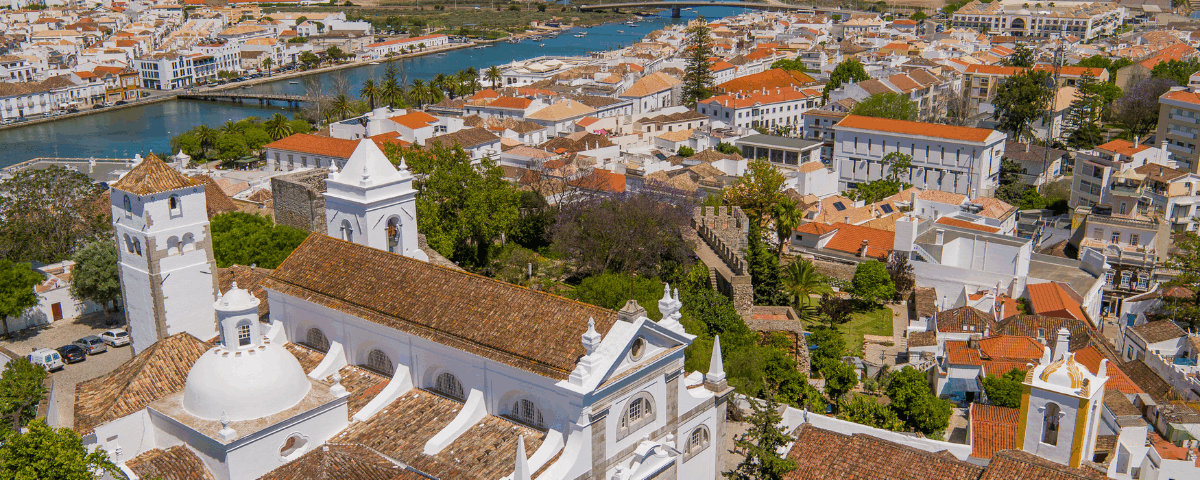
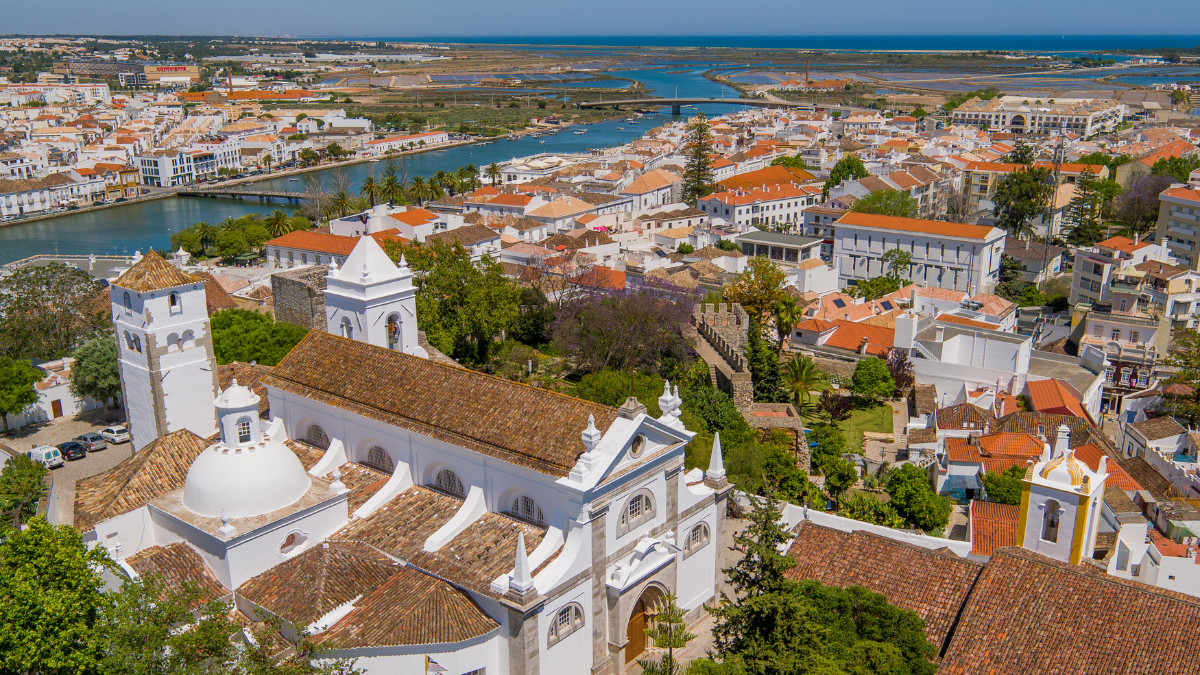
Tavira is packed with beautiful beaches featuring sands that seem to go on forever. The breath-taking coast contrasts perfectly with the fields of orange trees, hills of fig and almond trees and houses with dazzling whitewashed walls; where sea, countryside and culture meet. The charming town with fascinating architecture invites visitors to explore its stand-out attractions including the Tavira Castle.
What to do?
There are many pristine beaches, yet to be discovered by tourists, including those located on Tavira Island, a short boat ride away from the mainland; Praia do Barril, Praia da Terra Estreita, and Praia da Ilha de Tavria – fantastic for a slow-paced trip immersed in picturesque scenery. The Island belongs to the Ria Formosa Natural Reserve, which is popular with its birds and flamingos, a delight for bird lovers.
Vila Real de Santo António: Visitors can take a train from Faro to Vila Real de Santo António, close to the Spanish border and covering 49 kilometres in an uninterrupted and peaceful way. Visitors can meander around the streets and squares of the elegant town with 18th-century Pombaline-style buildings, immersing themselves in the history and authentic feel.
What to do?
The Eastern Algarve is home to some of the region’s most spectacular lagoons, saltpans, white washed villages and beaches. Nearby, visitors will find traditional saltpans where the fleur de sel is harvested manually. The Salmarim brand was created by Jorge Raiado to breathe a new lease of life into a family business. On a guided tour of the Salmarim’s traditional saltpans you will learn about the magical world of salt.