


Money Talks: Funding and M&A in Travel, Tourism and Hospitality
The travel, tourism and hospitality marketplace represent the world’s largest industry accounting for around 10% of global GDP and people it employs. Travel is also one of the most aspirational and intimate categories making it a thriving ground for start-up and innovation. It thereby creates a mammoth eco-system of startups, and early stage, growth and exit rounds of funding.
In an organizations growth curve, at a certain stage of maturity, consolidation or inorganic growth through mergers and acquisition becomes essential. Companies often grapple with questions such as the right target, the right valuation, the right market, on both the buy and sell side of the M&A spectrum in travel. The West—Europe and US—backed by the size of travel industry and financial maturity leads, while emerging markets in the East highlights the perfect storm of a handful of small to medium size deals with category defining market consolidation of yore.
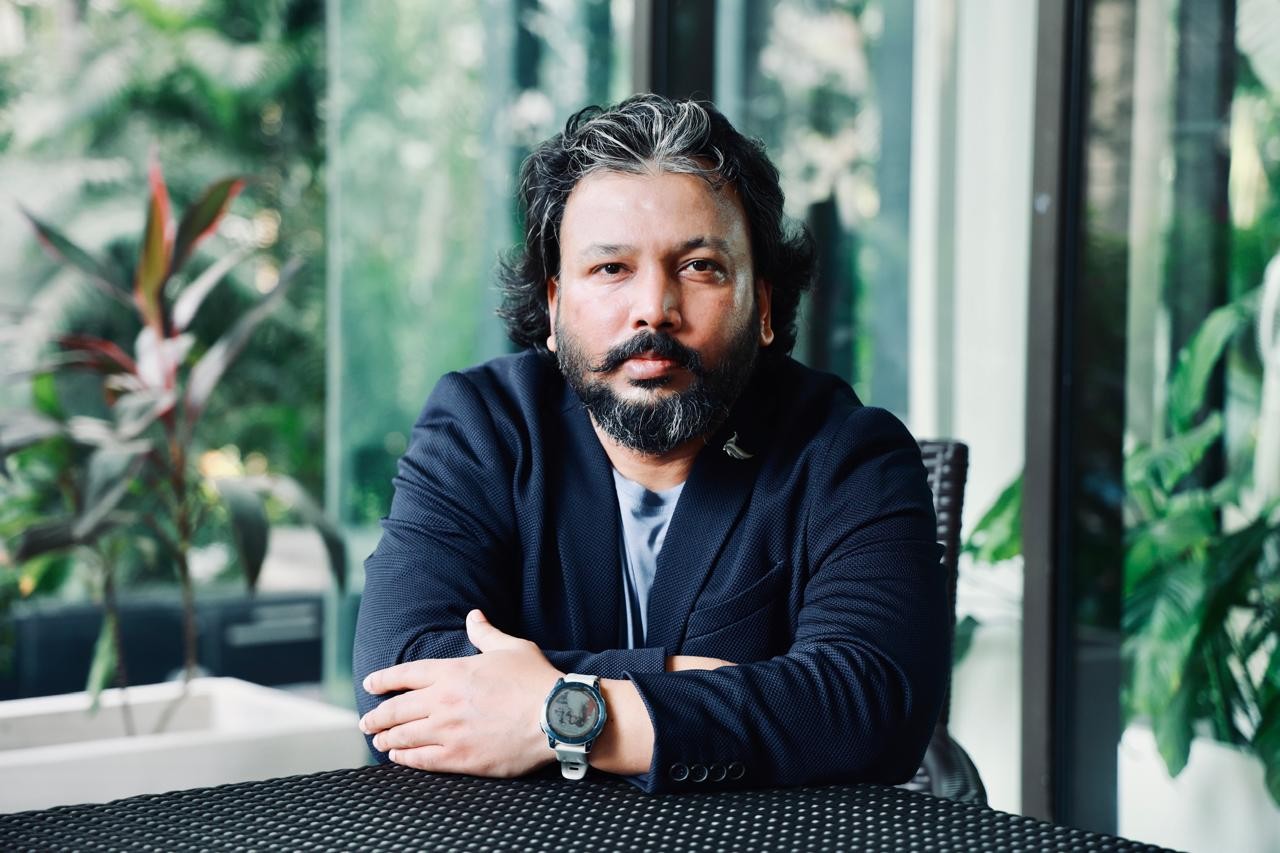
Virendra Jain, co-founder and CEO at VIDEC delivered a keynote address ahead of the panel discussion titled “Money Talks: Funding and M&A in Travel, Tourism and Hospitality”, on Nov 4th, 2025, the opening day of the World Travel Market in London. The panel featured industry leaders including Morgann Lesné (Partner, Cambon Partners), Peter Krueger (Executive Board Member – Chief Strategy Officer & CEO, Holiday Experiences, TUI Group), and Susie Stanford (Investment Partner, Growth Partner).
The session leveraged proprietary data and analysis from TheBank.travel, and delivered insights into how investors are identifying targets, navigating risks, and rethinking what it takes to build the next generation of travel companies.
Introduction—Travel’s Massive Investments and M&A Landscape
Travel industry worldwide had seen a surge in travel startups and early-stage funding at the dawn of the second decade of the 21st century. This was the time when the B2C businesses were all the raze in the travel, tourism and hospitality industry, and colored money was in vogue, with investors in the West chasing the immense demographic dividends in the East; namely China, India, and Southeast Asia. Ergo, some of the most notable OTA and other B2C brands got created during this period. However, the tide turned as travel came out of the throws of COVID, recalibrated, and found its new normal.
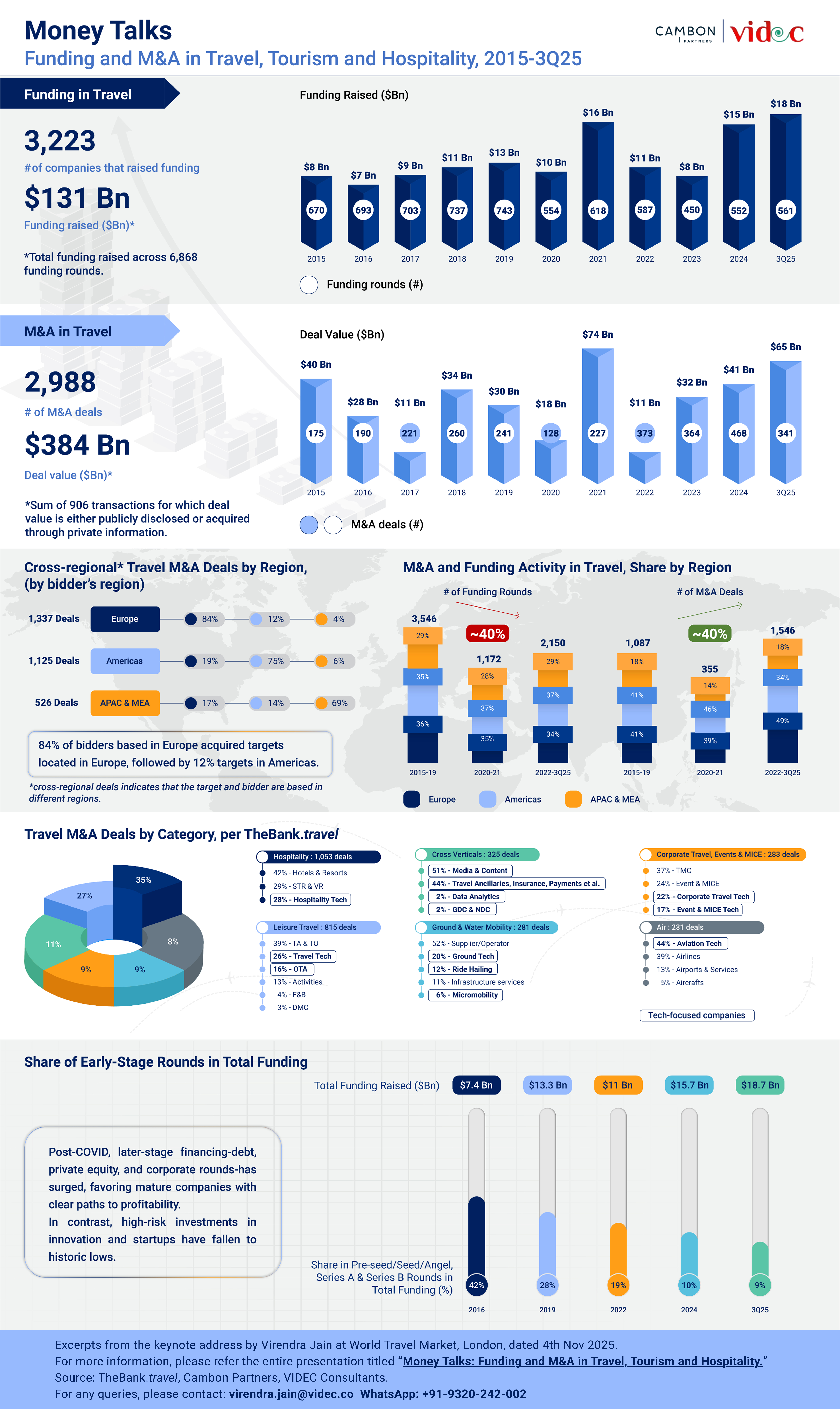
Between 2015 and 3Q25, nearly 3,220 travel companies raised US $131 billion. This funding was raised over 6,868 rounds of funding. The aggregated funding value excludes companies such as UBER, Didi, Grab, Ola, and LYFT; each of whom have raised upwards of $4 billion in aggregated funding to avoid bias. In the same period, nearly 3,000 travel M&A deals were closed. The aggregated deal value of 906 transactions, for which the deal value was available publicly or was acquired though private information, totaled $384 billion.
The State of Travel Funding Today
The first three quarters of 2025 have marked a milestone for funding in travel, reaching a record $18 billion—the highest level in the past decade. Yet, the number of deals has declined, with 550 rounds this year compared to nearly 750 in the pre-pandemic period. Despite fewer transactions, deal values are rising, underscoring a shift in investor focus.
While the downturn is not the “funding winter” as its touted to be, early-stage investments have dropped sharply. Series A, B, and seed rounds, which once accounted for 20–30% of annual capital raised, have fallen to just 9% in 2025—the lowest share in the past decade. In contrast, later-stage financing has surged. Debt, private equity, and corporate rounds are increasingly directed toward mature companies with clear paths to profitability. This recalibration reflects a post-COVID investment climate that favors stability and scale, while high-risk bets on startups and innovation have fallen to historic lows.
M&A Momentum—Travel’s Era of Consolidation
Europe now accounts for one in every two global travel M&A deals. It also leads in cross-border activity, with 55% of transactions involving targets acquired by bidders from other countries.
The Americas region led in overall deal value, followed by Europe. While M&A activity in the East remains in its early stages, a notable trend is emerging: bidders from Europe and the Americas are primarily acquiring targets within their own regions, whereas APAC and MEA-based bidders are increasingly looking to go global. In fact, 17% of their acquisitions targeted companies in Europe, and 14% in the Americas. This shift signals a turning of the tide, underscoring the global ambitions of Eastern bidders—particularly from Australia, China, India, Japan, and the GCC region.
Morgann Lesné, Partner at Cambon Partners, commented: “Notably, 84% of European bidders are acquiring companies based within Europe. The consolidation trend seen globally is especially pronounced in this region. Much of the inorganic growth is being driven by travel tech firms such as TravelSoft, Lighthouse, Mews, and Juniper, which have pursued steady acquisitions since 2022 to build pan-European brands.”
Travel’s M&A Landscape Today
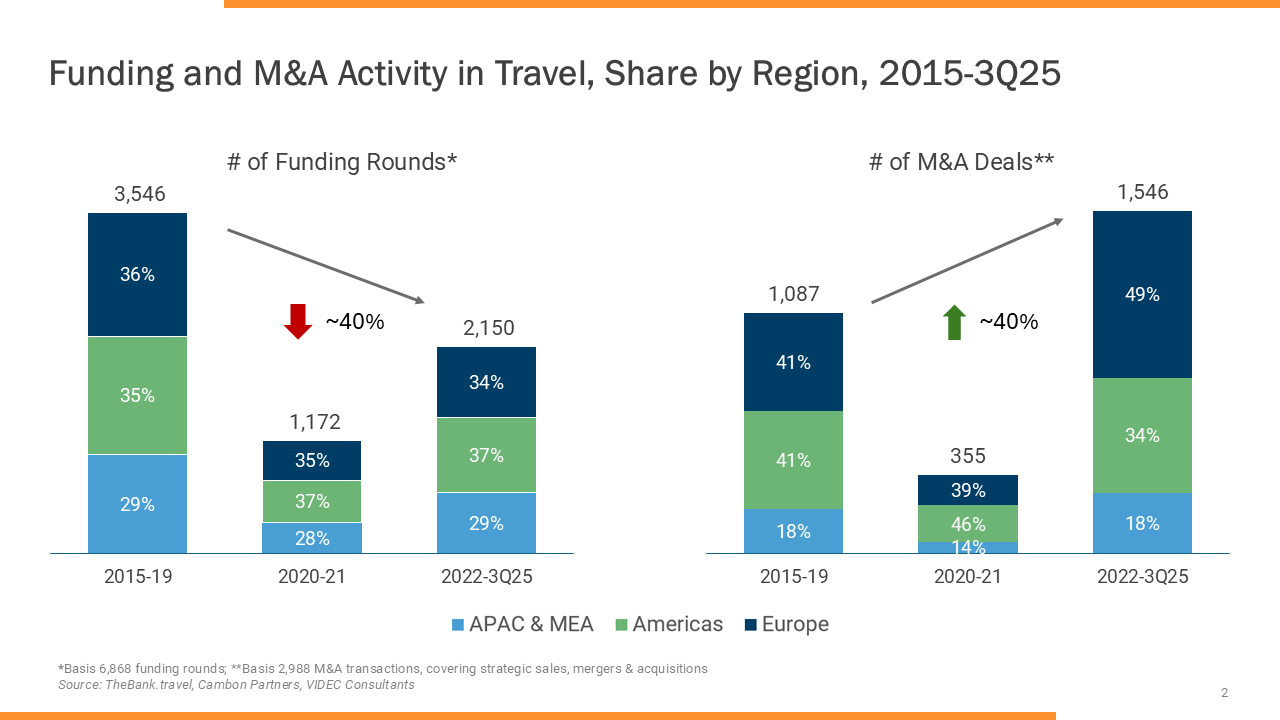
Insights from TheBank.travel reveal a decade-long trend of consolidation shaping the global travel, tourism, and hospitality industry. A growing number of companies that secured growth-stage funding between 2015 and 2019 are now actively pursuing exits, contributing to a robust pipeline ripe for consolidation. M&A activity surged by 40% when comparing the 2015–2019 period to 2022 through 3Q25, underscoring a strategic shift towards expanding their product portfolios and geographic reach. In contrast, funding activity declined by 40% over the same timeframe, highlighting a marked pivot from top-line growth at any cost to companies with sustainable and profitable P&L.
Where Investors See the Next Wave of Innovation
Hospitality is the most active vertical in travel M&A, accounting for 1,053 deals—or 35% of all transactions. Leisure travel follows, with 815 companies changing hands during the same period. Travel tech has emerged as the common denominator across all the supply and distribution categories in travel, with an all-time high action in horizontal categories; namely payments, Fintech, Martech, Loyalty, insurance and other ancillary categories powered by NDC.
Looking Ahead — What’s Next for Funding & M&A
The first three quarters of 2025 made an all-time high in terms of investments in travel companies, led by debt, PE and strategics. Much of this investment is fueling organic and inorganic growth in the form of M&As. Mature companies with a clear path to profitability are now attracting debt and private equity backing, driving a wave of M&A-led consolidation. Virendra Jain, Co-founder and CEO of VIDEC Consultants, remarked: “There’s an unfortunate dichotomy at play in investments—early-stage funding has dropped to single-digit share for the first time in the first three quarters of 2025, even as total funding in travel, including late-stage rounds, continue to make new highs. The high-risk, high-reward capital that once fueled innovation and startups has largely disappeared.”
Conclusion—Building the Next Generation of Travel Companies
The travel, tourism, and hospitality industry stands at a pivotal juncture where capital flows and consolidation are reshaping its future. Record-high funding in 2025, driven by debt, private equity, and strategic investors, underscores a decisive tilt toward mature businesses with proven profitability. At the same time, the sharp decline in early-stage funding signals a retreat from the high-risk appetite that once fueled disruptive innovation. Parallel to this recalibration, M&A activity has accelerated, particularly in Europe and the Americas, with Eastern bidders increasingly asserting global ambitions. This dual dynamic—funding stability and consolidation momentum—marks a structural shift in how growth is pursued across the sector.
For investors and operators alike, the challenge lies in balancing scale with innovation. As the industry evolves, the winners will be those who can future-proof themselves against high-tech A.I., blockchain and paperless IDs, not just to expand portfolios, but to redefine customer experience and operational resilience. In this new era, “money talks” louder than ever, shaping the next generation of travel companies poised to thrive in a hyper-tech, globally interconnected marketplace.
Infographic: